
$699.70 Original price was: $699.70.$549.99Current price is: $549.99.
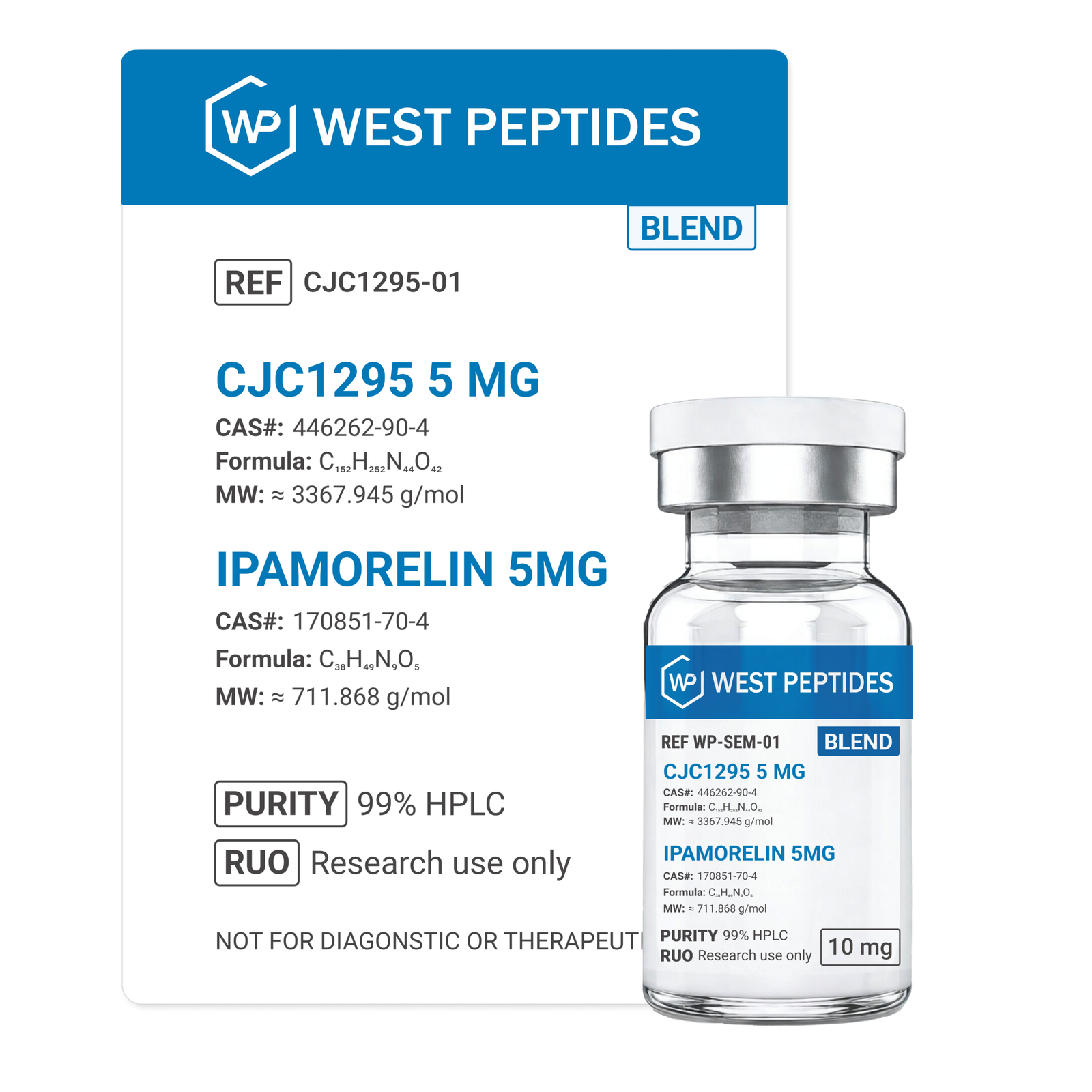
This dual-peptide formulation combines CJC-1295 (No DAC), a short-acting GHRH analog, with Ipamorelin, a selective growth hormone secretagogue. Together, they are widely studied in research environments for their interaction with growth hormone signaling pathways and receptor-mediated endocrine mechanisms.
West Peptides supplies this blend in high-purity, lyophilized form for controlled laboratory investigation and reproducible research applications.
$699.70 Original price was: $699.70.$549.99Current price is: $549.99.
This dual-peptide formulation combines CJC-1295 (No DAC), a short-acting GHRH analog, with Ipamorelin, a selective growth hormone secretagogue. Together, they are widely studied in research environments for their interaction with growth hormone signaling pathways and receptor-mediated endocrine mechanisms.
West Peptides supplies this blend in high-purity, lyophilized form for controlled laboratory investigation and reproducible research applications.
Dual Peptide Blend (20mg Total)
This dual-peptide formulation combines CJC-1295 (No DAC), a short-acting GHRH analog, with Ipamorelin, a selective growth hormone secretagogue. Together, they are widely studied in research environments for their interaction with growth hormone signaling pathways and receptor-mediated endocrine mechanisms.
West Peptides supplies this blend in high-purity, lyophilized form for controlled laboratory investigation and reproducible research applications.
CJC-1295 (No DAC) – 10mg
A synthetic analog of growth hormone–releasing hormone designed without a Drug Affinity Complex, allowing researchers to study short-duration, pulsatile signaling patterns.
Ipamorelin – 10mg
A selective peptide studied for its interaction with ghrelin receptor pathways and its role in growth hormone–related signaling models in experimental systems.
Together, these peptides provide a structured framework for investigating coordinated signaling behavior across multiple receptor systems.
CJC-1295 (No DAC) and Ipamorelin are frequently studied together due to their complementary mechanisms in research models:
This combination allows researchers to explore how multiple signaling inputs influence endocrine pathway activity within controlled environments.
In experimental settings, this blend has been associated with:
These mechanisms are studied to better understand how dual-pathway activation influences signaling dynamics.
This blend is commonly incorporated into research involving:
By combining two distinct peptide classes, researchers can examine how upstream and downstream signaling pathways interact in controlled systems.
CJC-1295 (No DAC) / Ipamorelin blend from West Peptides is supplied as a white lyophilized powder designed to preserve structural integrity and stability.
The freeze-dried format allows for controlled preparation using appropriate sterile solvents in qualified laboratory environments.
Composition: CJC-1295 (No DAC) 10mg + Ipamorelin 10mg
Total Content: 20mg peptide blend
Peptide Types: GHRH analog + growth hormone secretagogue
Form: Lyophilized powder
Purity Standard: High analytical grade
Stability: Maintains integrity under recommended storage conditions
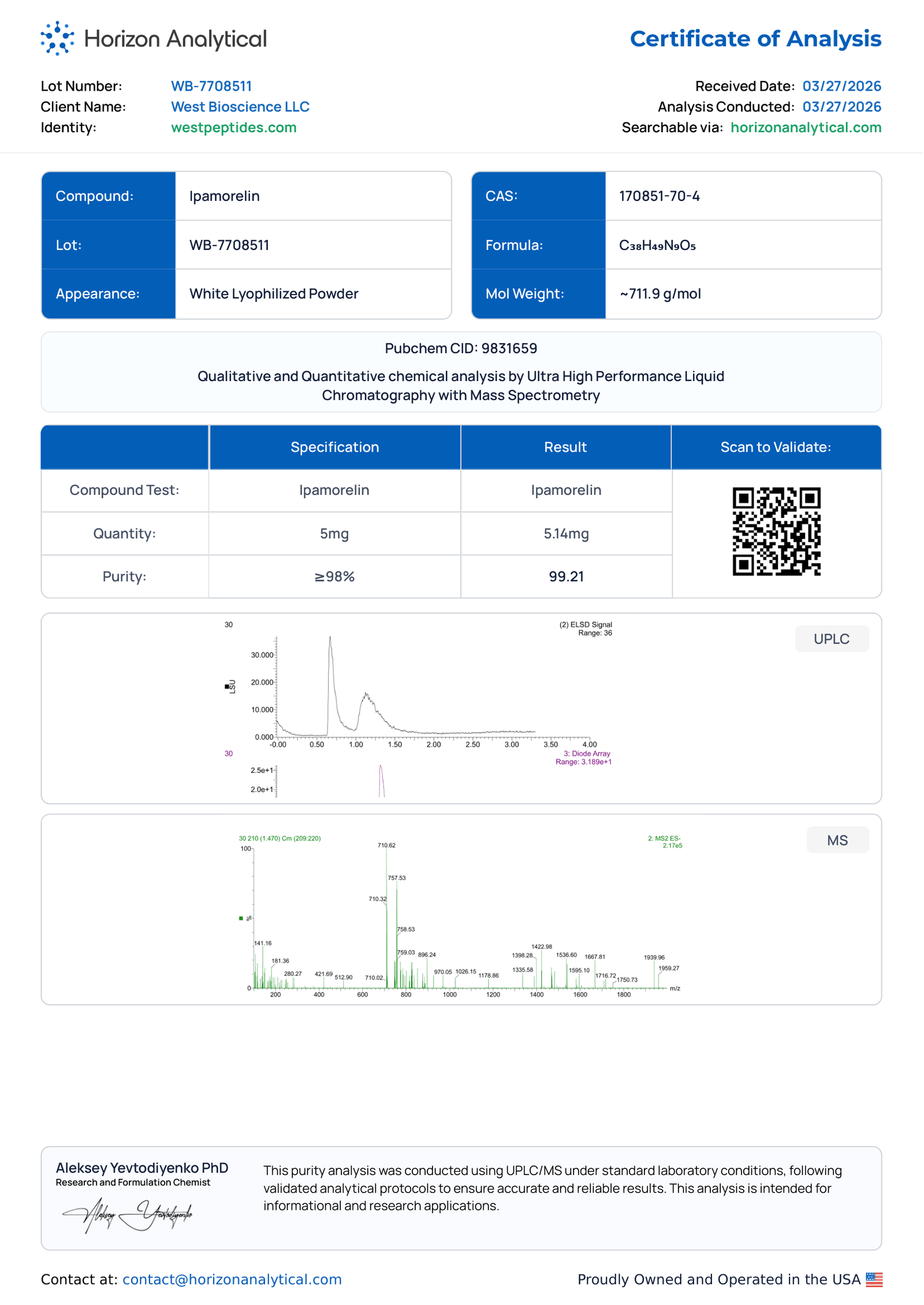
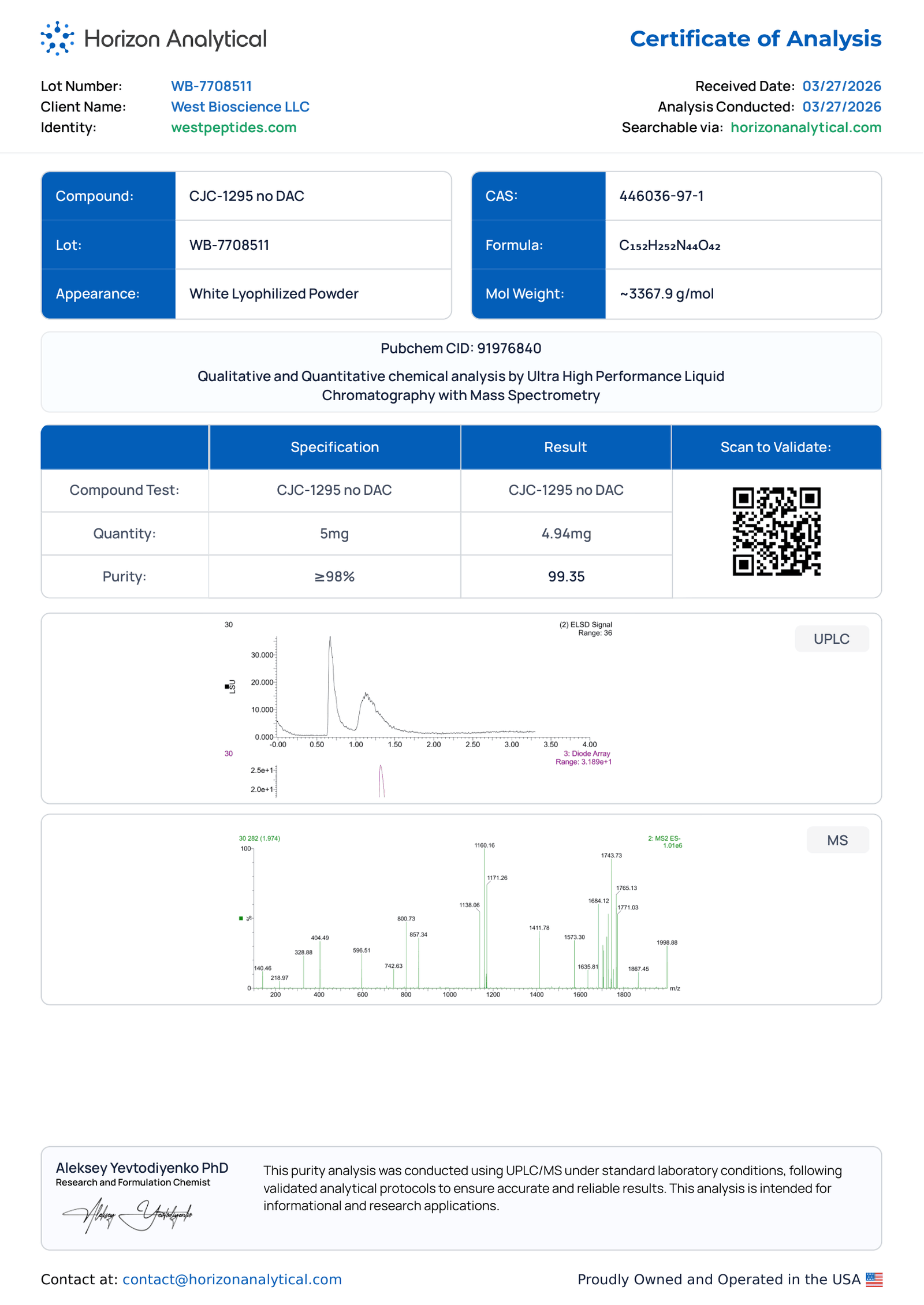
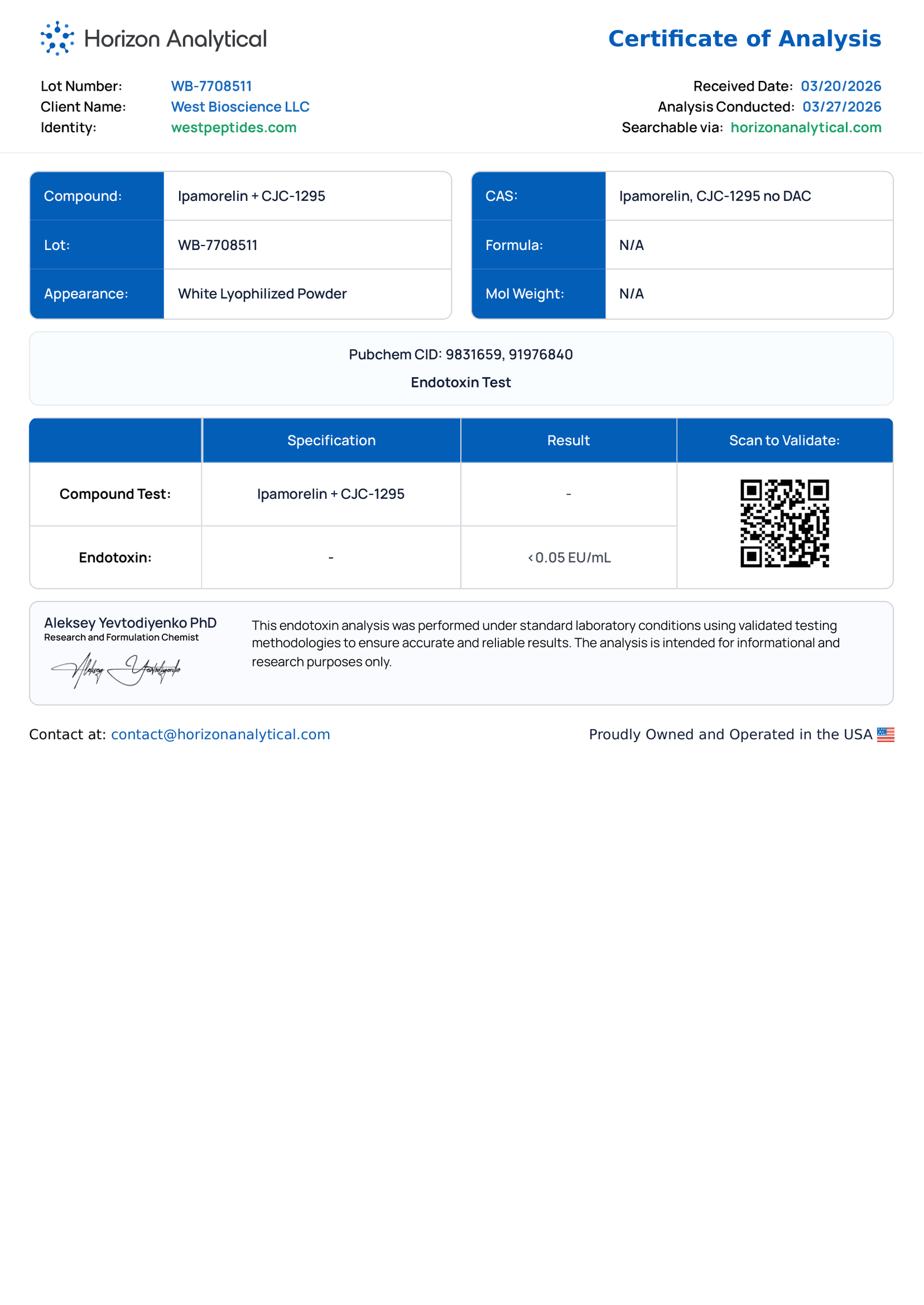
Each batch is verified to ensure consistency and reproducibility in research applications.
This blend may be incorporated into research involving:
These applications reflect structured laboratory environments focused on endocrine system signaling and peptide interaction.
Dual-Pathway Peptide Design
Combines GHRH analog and ghrelin receptor agonist for integrated signaling research.
Short-Acting Profile
CJC-1295 (No DAC) supports time-dependent signaling investigations.
Selective Receptor Targeting
Ipamorelin is studied for its specificity in receptor interaction models.
High Purity Verification
Manufactured and tested for analytical consistency.
Lyophilized for Stability
Supports reliable storage and controlled preparation.
What is this blend used for in research?
It is used to study how multiple peptide pathways interact within growth hormone signaling and endocrine systems.
Why combine CJC-1295 (No DAC) with Ipamorelin?
Combining these peptides allows researchers to explore coordinated signaling between upstream GHRH pathways and downstream receptor-mediated pathways.
What makes the No DAC version different?
The No DAC version is shorter acting, making it useful for studying pulsatile and time-dependent signaling patterns.
What type of research involves this blend?
It is commonly used in studies focused on endocrine signaling, receptor interaction, and hormone pathway modeling.
Is this product intended for therapeutic use?
No. This product is intended for research purposes only.
For research use only. Not intended for human or veterinary use.
Our products are produced using a freeze-drying process (lyophilization), which helps maintain their integrity and stability during transit, typically for up to 3–4 months.
After the peptides are reconstituted (mixed with bacteriostatic water), they should be kept refrigerated to preserve their quality. Once in liquid form, they generally remain stable for up to 30 days when stored properly.
Lyophilization—also referred to as cryodesiccation—is a dehydration method where the material is first frozen and then exposed to low pressure. This allows moisture to transition directly from solid to vapor, leaving behind a dry, stable compound in the form of a light, crystalline powder. In this state, the product can be kept at room temperature until it is ready to be reconstituted.
Upon receiving your peptides, it is recommended to protect them from heat and light exposure. For short-term use (ranging from a few days to several weeks), refrigeration below 4°C (39°F) is suitable. Lyophilized products can also tolerate room temperature storage for a limited period if they will be used relatively soon.
For extended storage—spanning several months or longer—freezing is advised. Ideally, peptides should be kept at approximately -80°C (-112°F) to best maintain long-term stability