
Buy One Get One FREE Sale On ALL Peptides. Unlimited quantity. Today Only. Ends soon! Limited While Supplies Last

Buy One Get One FREE. All Peptides - Limited Supplies!

Need help? Call Or Text us, and a team member will be happy to assist you. 1-877-889-3787

Search The Arcticle

ALL ARTICLES AND PRODUCT INFORMATION PROVIDED ON THIS WEBSITE ARE FOR INFORMATIONAL AND EDUCATIONAL PURPOSES ONLY. The products offered on this website are furnished for in-vitro studies only. In-vitro studies (Latin: in glass) are performed outside of the body. These products are not medicines or drugs and have not been approved by the FDA to prevent, treat or cure any medical condition, ailment or disease. Bodily introduction of any kind into humans or animals is strictly forbidden by law.

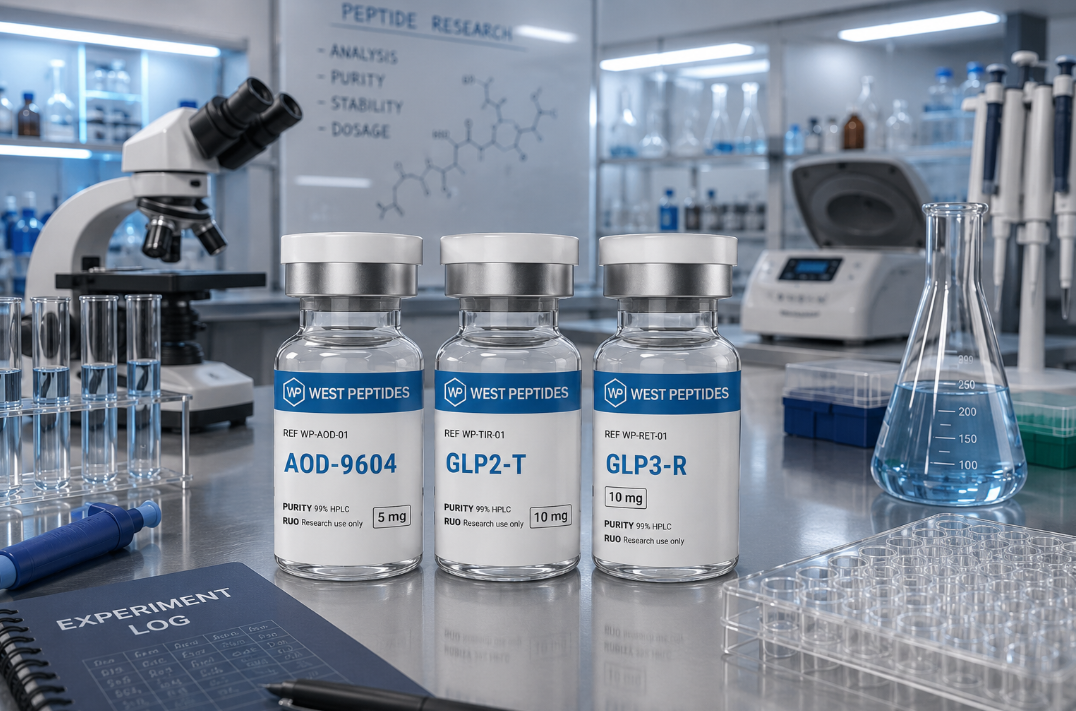
Weight Reduction with AOD9604 vs GLP1-S, GLP2-T, and GLP3-R: A Clinical Comparison

AOD9604 and incretin-based agents (GLP1-S, GLP2-T, GLP3-R) represent fundamentally different pharmacologic approaches to weight reduction. The distinction is not primarily one of magnitude, but of mechanism, target tissue, and regulatory pathway engagement. AOD9604 is a fragment of human growth hormone (hGH) designed to influence adipose tissue metabolism directly, whereas GLP-based agents act centrally and peripherally to reduce energy intake and modify metabolic signaling.

For reference formulation:
AOD9604 – https://westpeptides.com/product/aod-9604/


Mechanistic Classification

AOD9604

AOD9604 is a synthetic peptide derived from the C-terminal region of human growth hormone (amino acids 177–191). It is designed to retain lipolytic activity without broader endocrine effects associated with full-length GH.

Its mechanism is characterized by:

  • Stimulation of lipolysis (fat breakdown)
  • Inhibition of lipogenesis (fat formation)
  • Activation of beta-adrenergic pathways in adipose tissue

This results in a peripheral, adipocyte-targeted mechanism, with minimal direct effects on appetite, satiety, or central nervous system regulation.

Unlike incretin-based compounds, AOD9604 does not significantly alter insulin secretion or glucose homeostasis in most models.


GLP1-S

GLP1-S compounds are glucagon-like peptide-1 receptor agonists that act on both central and peripheral systems. Their primary mechanism is appetite suppression through hypothalamic signaling and delayed gastric emptying.

Key effects include:

  • Reduced caloric intake via satiety signaling
  • Slowed gastric emptying
  • Improved glycemic control
  • Modulation of insulin secretion

These agents induce weight reduction primarily through negative energy balance, driven by reduced food intake.


GLP2-T

GLP2-T agents (dual agonists) engage both GLP-1 and additional incretin pathways, typically including GIP-related signaling.

Their mechanism includes:

  • Enhanced insulin sensitivity
  • Increased satiety signaling
  • Combined incretin pathway activation

This dual engagement leads to greater metabolic efficiency and caloric reduction, producing more pronounced weight loss compared to single-pathway agents.


GLP3-R

GLP3-R compounds represent triple-agonist signaling frameworks, typically targeting GLP-1, GIP, and glucagon receptors.

Their mechanism extends beyond appetite suppression:

  • Increased energy expenditure
  • Enhanced lipid metabolism
  • Combined central and peripheral signaling

This results in both reduced intake and increased expenditure, distinguishing GLP3-R from earlier incretin classes.


Primary Mechanistic Difference

The defining distinction between AOD9604 and incretin-based agents is the location of action:

  • AOD9604 → Peripheral fat metabolism (lipolysis-focused)
  • GLP1-S / GLP2-T / GLP3-R → Central appetite regulation + systemic metabolic control

AOD9604 attempts to reduce stored fat directly, whereas GLP-based compounds primarily reduce caloric intake and secondarily affect fat mass.


Clinical Efficacy

AOD9604

Clinical data for AOD9604 is limited and inconsistent.

  • A randomized controlled trial showed modest weight loss (~2.6 kg over 12 weeks vs placebo)
  • Other studies failed to demonstrate consistent or clinically meaningful outcomes

Development of AOD9604 for obesity treatment was discontinued after insufficient efficacy in later-stage trials.

Overall, AOD9604 demonstrates:

  • Modest reductions in fat mass
  • Limited total body weight change
  • Variable reproducibility across studies

GLP1-S

GLP1-S compounds have demonstrated consistent weight reduction in large clinical trials.

  • Mean weight loss ranges from ~5–15% of body weight depending on dose and duration
  • Sustained weight reduction observed over extended periods
  • Clinically meaningful reductions in cardiometabolic risk markers

Earlier GLP-1 agents demonstrated weight reductions of approximately 4–7 kg in controlled trials.


GLP2-T

Dual agonists demonstrate greater efficacy:

  • Average weight loss exceeding GLP1-S
  • Improved insulin sensitivity
  • Enhanced fat mass reduction

Meta-analyses show superior weight reduction compared to GLP1-only agents.


GLP3-R

Triple agonists demonstrate the highest efficacy in current investigational models:

  • Combined appetite suppression and increased energy expenditure
  • Substantial reductions in body weight and fat mass
  • Greater metabolic remodeling compared to earlier classes

These compounds represent the most aggressive pharmacologic approach to weight reduction currently under investigation.


Appetite vs Fat Oxidation

AOD9604

  • No significant appetite suppression
  • No central satiety signaling
  • No direct effect on caloric intake

Weight reduction depends on:

  • Enhanced lipolysis
  • Increased fat utilization

This makes outcomes highly dependent on baseline energy balance.


GLP-Based Agents

  • Strong appetite suppression
  • Reduced caloric intake
  • Behavioral reinforcement of dietary restriction

Weight reduction is driven primarily by:

  • Decreased food consumption
  • Secondary metabolic improvements

This distinction explains the difference in clinical magnitude between the two approaches.


Metabolic Effects

AOD9604

  • Minimal impact on blood glucose
  • Limited effect on insulin sensitivity
  • Primarily affects adipose tissue

This makes it metabolically narrow in scope.


GLP1-S / GLP2-T / GLP3-R

  • Significant improvements in glycemic control
  • Enhanced insulin sensitivity
  • Reduced hepatic glucose production
  • Effects on lipid metabolism

These compounds operate within a system-wide metabolic framework, not limited to fat tissue.


Safety and Tolerability

AOD9604

  • Generally well tolerated in studies
  • Minimal systemic endocrine effects
  • No significant appetite-related adverse effects

However:

  • Lack of long-term outcome data
  • Limited clinical validation

GLP-Based Agents

  • Common adverse effects: nausea, gastrointestinal discomfort
  • Dose-dependent tolerability
  • Extensive safety data from large trials

Despite side effects, these agents have established clinical use in metabolic disease.


Regulatory Status

  • AOD9604: Not approved for obesity treatment; limited clinical adoption
  • GLP1-S / GLP2-T: Approved for metabolic disease and weight management
  • GLP3-R: Investigational but supported by large-scale clinical programs

The regulatory distinction reflects differences in evidence strength and clinical outcomes.


Practical Implications for Weight Reduction

AOD9604 Profile

  • Peripheral fat-targeting mechanism
  • Modest efficacy
  • No appetite suppression
  • Limited systemic metabolic effects

Appropriate for:

  • Targeted fat metabolism studies
  • Adjunct research models

GLP-Based Profile

  • Central appetite regulation
  • Strong clinical efficacy
  • Systemic metabolic improvement
  • Sustained weight reduction

Appropriate for:

  • Obesity models
  • Metabolic disease research
  • Energy balance studies

Comparative Summary

FeatureAOD9604GLP1-SGLP2-TGLP3-R
MechanismLipolysisAppetite suppressionDual incretin signalingTriple pathway activation
Primary TargetAdipose tissueCNS + pancreasCNS + metabolic pathwaysCNS + metabolic + energy expenditure
Appetite EffectNoneStrongStrongStrong
Weight Loss MagnitudeLow–moderateModerate–highHighVery high
Evidence BaseLimitedExtensiveExtensiveEmerging
Regulatory StatusNot approvedApprovedApprovedInvestigational

Frequently Asked Questions

What is the main difference between AOD9604 and GLP-based agents?

AOD9604 targets fat metabolism directly, while GLP-based agents reduce body weight primarily through appetite suppression and metabolic regulation.

Why do GLP-based compounds produce greater weight loss?

They create a sustained caloric deficit through appetite reduction and improved metabolic efficiency, which leads to more consistent weight reduction.

Does AOD9604 affect hunger?

No. AOD9604 does not significantly influence appetite or satiety signaling.

Can AOD9604 match GLP-based weight loss outcomes?

Current evidence indicates that AOD9604 produces significantly smaller and less consistent weight reduction compared to GLP-based compounds.

Are the mechanisms complementary?

Yes. AOD9604 targets fat breakdown, while GLP-based agents target energy intake and metabolic signaling, making them mechanistically distinct.

Why is the evidence base different?

GLP-based agents have undergone large-scale randomized clinical trials, whereas AOD9604 has limited and inconsistent human data.

Research Use Only

All products on this site are for research and development use only. Products are not for human consumption of any kind. The statements made on this website have not been evaluated by the US Food and Drug Administration. The statements and the products of this company are not intended to diagnose, treat, cure, or prevent any disease.
West Peptides is a chemical supplier. West Peptides is not a compounding pharmacy or chemical compounding facility as defined under 503A of the Federal Food, Drug, and Cosmetic Act. West Peptides not an outsourcing facility as defined under 503B of the Federal Food, Drug, and Cosmetic Act.
All products are sold for research, laboratory, or analytical purposes only, and are not for human consumption.
0