
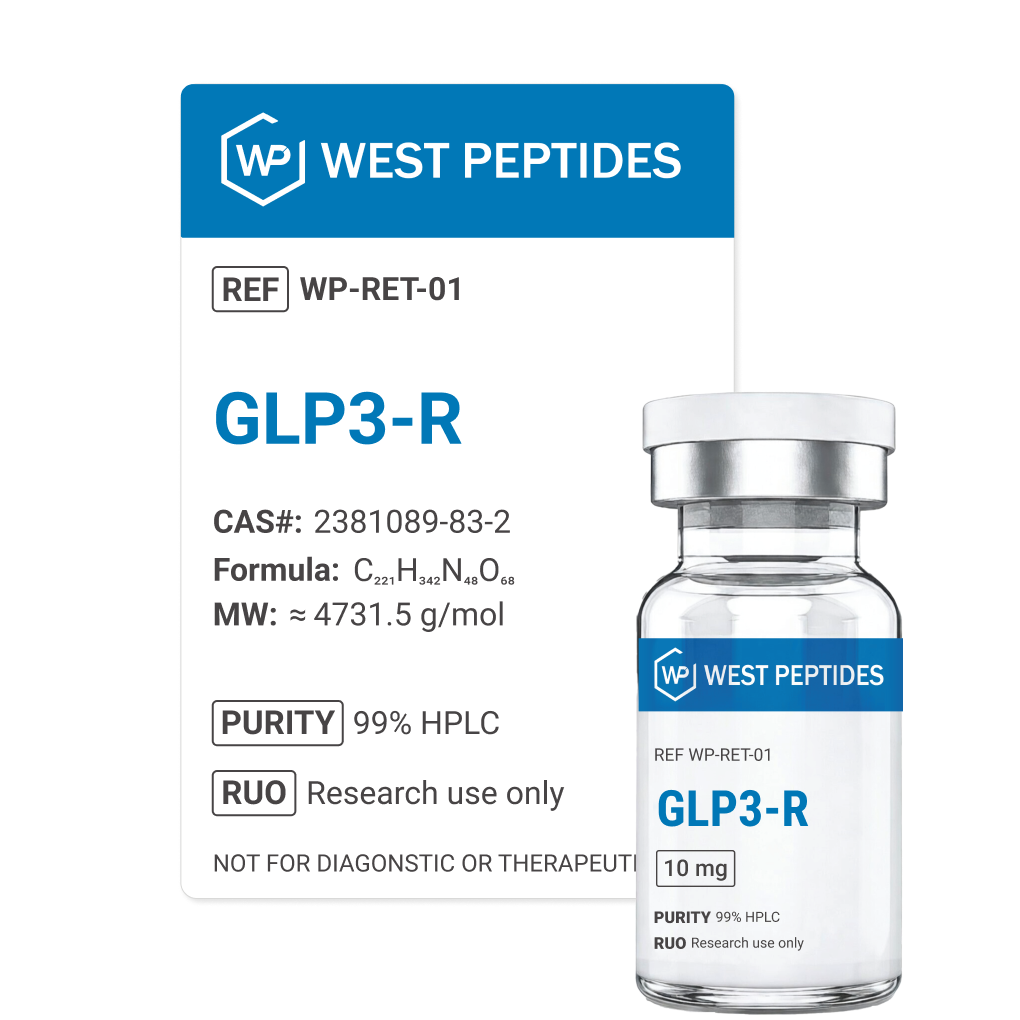
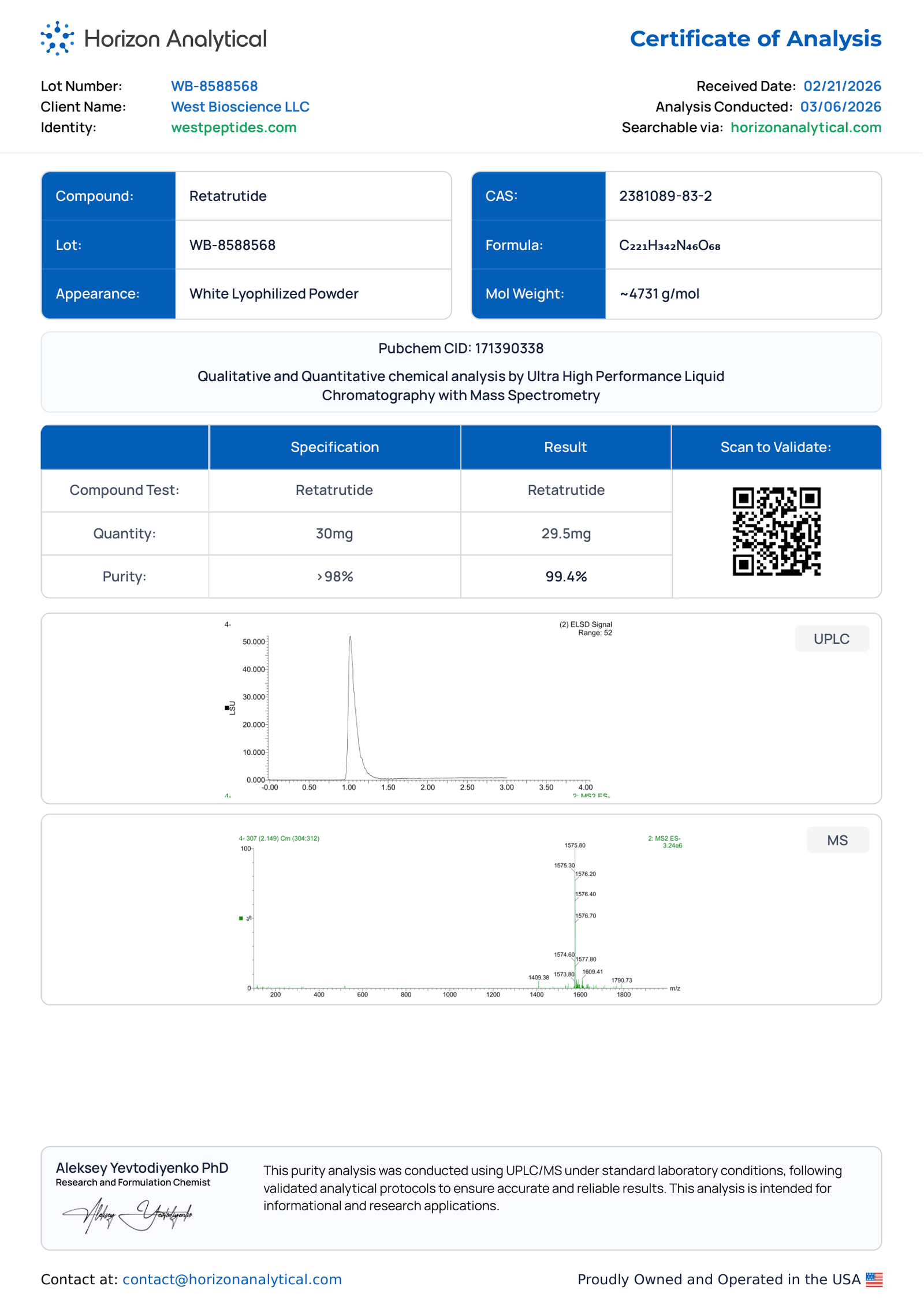
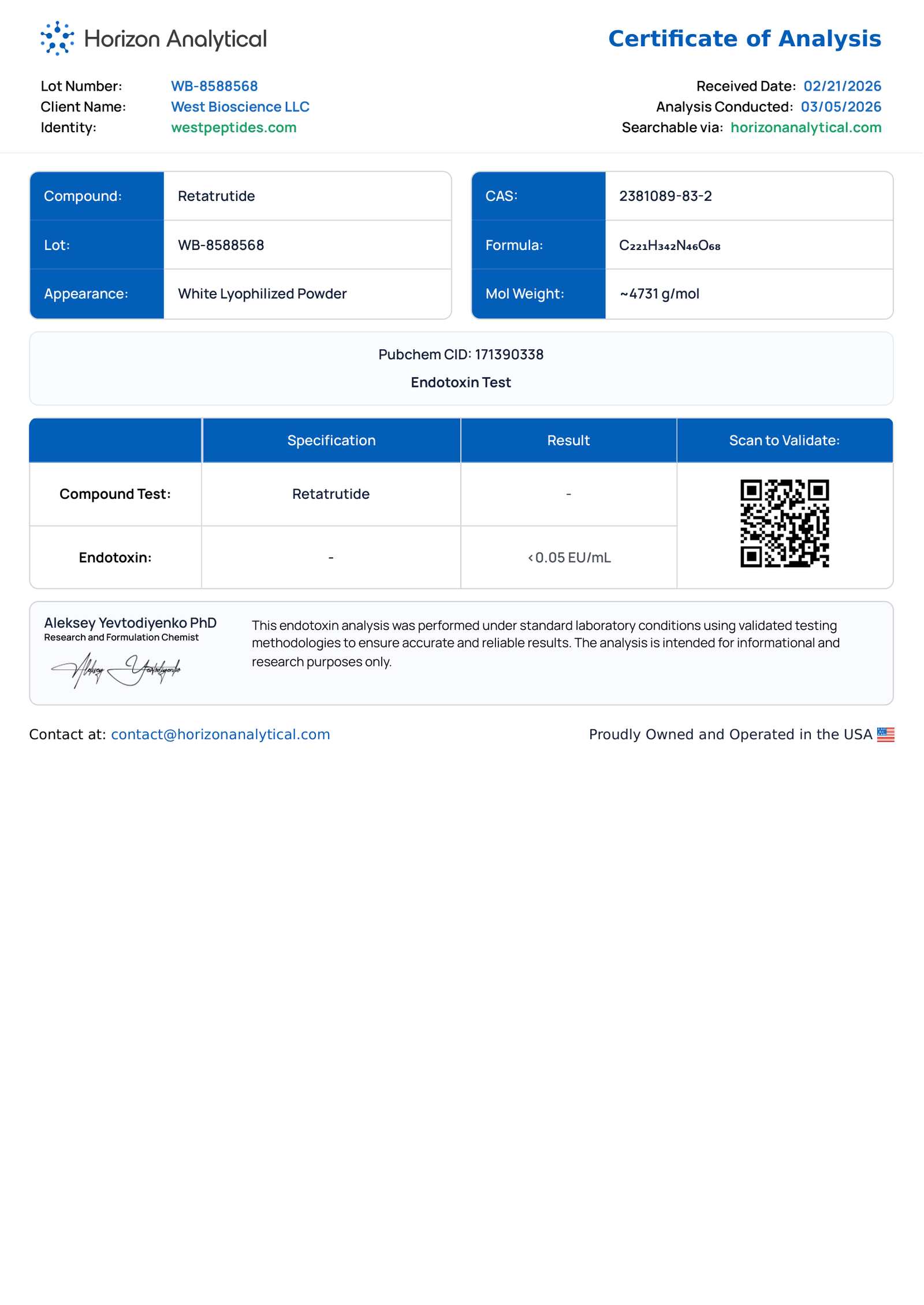
$139.99 – $259.99Price range: $139.99 through $259.99
BUY ONE, GET ONE FREE
Add any quantity to your cart - we'll double it for free. Limited time offer.
Triple Receptor Research Peptide
GLP-3-R is an investigational synthetic peptide designed as a triple receptor agonist targeting GLP-1, GIP, and glucagon receptors. In controlled clinical and preclinical research settings, it has been evaluated for its activity within metabolic signaling pathways, appetite-related signaling mechanisms, and coordinated energy balance processes.
Current research literature describes its interaction with multiple hormonal receptor systems involved in metabolic regulation and energy homeostasis. Observed outcomes in study environments have included changes in biomarkers associated with metabolic function and body weight parameters; however, these findings are limited to controlled research contexts.
$139.99 – $259.99Price range: $139.99 through $259.99
 Manufactured
Triple Receptor Research Peptide
GLP-3-R is an investigational synthetic peptide designed as a triple receptor agonist targeting GLP-1, GIP, and glucagon receptors. In controlled clinical and preclinical research settings, it has been evaluated for its activity within metabolic signaling pathways, appetite-related signaling mechanisms, and coordinated energy balance processes.
Current research literature describes its interaction with multiple hormonal receptor systems involved in metabolic regulation and energy homeostasis. Observed outcomes in study environments have included changes in biomarkers associated with metabolic function and body weight parameters; however, these findings are limited to controlled research contexts.

Triple Receptor Research Peptide
GLP-3-R is an investigational synthetic peptide designed as a triple receptor agonist targeting GLP-1, GIP, and glucagon receptors. In controlled clinical and preclinical research settings, it has been evaluated for its activity within metabolic signaling pathways, appetite-related signaling mechanisms, and coordinated energy balance processes.
Current research literature describes its interaction with multiple hormonal receptor systems involved in metabolic regulation and energy homeostasis. Observed outcomes in study environments have included changes in biomarkers associated with metabolic function and body weight parameters; however, these findings are limited to controlled research contexts.
Due to its multi-receptor design, GLP-3-R represents a category of investigational peptide research focused on integrated hormonal signaling systems. It is intended strictly for research purposes and not for human consumption, therapeutic use, or clinical application outside approved research environments.
GLP-3-R is structurally designed to interact with three key receptor systems involved in metabolic control:
In controlled clinical research models, triple agonist peptides such as GLP-3-R have demonstrated significant engagement across these pathways, leading to measurable metabolic and weight-related outcomes under supervised study conditions.
Clinical trials evaluating GLP-3-R have examined:
Published trial data suggest that multi-receptor agonism may produce amplified metabolic signaling effects compared to single-pathway peptides in structured research environments.
Because of this integrated mechanism, GLP-3-R has become a subject of interest in advanced metabolic research programs exploring next-generation peptide signaling systems.
Peptide Classification: Triple receptor agonist
Target Systems: GLP-1, GIP, glucagon receptors
Structure Type: Synthetic long-acting peptide analog
Research Category: Investigational metabolic signaling peptide
GLP-3-R remains under active clinical investigation and is not approved for general clinical use outside regulated research settings.
GLP-3-R has been studied in controlled research frameworks involving:
Its triple agonist structure makes it particularly relevant in research exploring coordinated endocrine signaling networks.
What makes GLP-3-R different from other metabolic peptides?
GLP-3-R is designed to activate three receptor systems simultaneously, rather than targeting a single pathway. This multi-receptor approach is a focus of ongoing clinical investigation.
Why are triple agonist peptides being studied?
Researchers are examining whether coordinated receptor activation may produce amplified or synergistic effects across metabolic signaling pathways compared to single-receptor peptides.
How does GLP-3-R differ from GLP-1–only research peptides?
Unlike peptides that target only the GLP-1 receptor, GLP-3-R is designed to engage three receptor systems. This broader interaction profile is the focus of ongoing metabolic research.
What makes GLP-3-R a focus of current metabolic research?
Its multi-receptor design and clinical trial outcomes have positioned it as a subject of interest in advanced research exploring next-generation metabolic peptide therapies.
This product is intended strictly for laboratory research and scientific investigation purposes only. GLP-3-R and its individual peptide components are not approved by the United States Food and Drug Administration for human or veterinary use. They are not intended for use as drugs, dietary supplements, cosmetics, or food products.
Our products are produced using a freeze-drying process (lyophilization), which helps maintain their integrity and stability during transit, typically for up to 3–4 months.
After the peptides are reconstituted (mixed with bacteriostatic water), they should be kept refrigerated to preserve their quality. Once in liquid form, they generally remain stable for up to 30 days when stored properly.
Lyophilization—also referred to as cryodesiccation—is a dehydration method where the material is first frozen and then exposed to low pressure. This allows moisture to transition directly from solid to vapor, leaving behind a dry, stable compound in the form of a light, crystalline powder. In this state, the product can be kept at room temperature until it is ready to be reconstituted.
Upon receiving your peptides, it is recommended to protect them from heat and light exposure. For short-term use (ranging from a few days to several weeks), refrigeration below 4°C (39°F) is suitable. Lyophilized products can also tolerate room temperature storage for a limited period if they will be used relatively soon.
For extended storage—spanning several months or longer—freezing is advised. Ideally, peptides should be kept at approximately -80°C (-112°F) to best maintain long-term stability
A precision-driven journey from pharma-grade raw materials to your doorstep, ensuring the highest purity, stability, and quality at every stage.
From molecule to delivery — West Peptides