
$99.99
BUY ONE, GET ONE FREE
Add any quantity to your cart - we'll double it for free. Limited time offer.
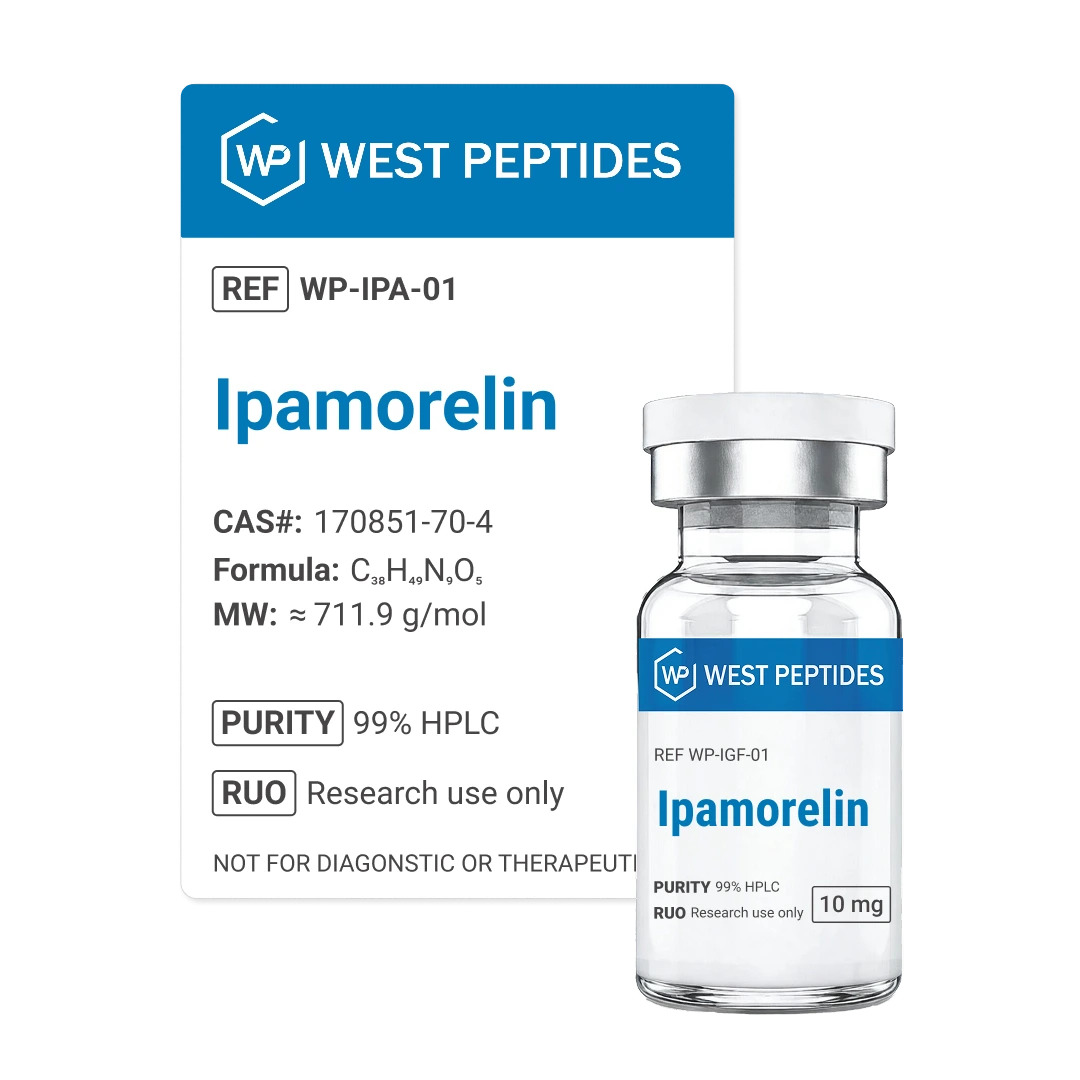
Ipamorelin is a synthetic peptide composed of five amino acids in a defined sequence that has been widely referenced in scientific and preclinical research literature. It belongs to a class of molecules known as growth hormone secretagogues, which interact with specific biological receptors in laboratory models.
$99.99
 Manufactured
Ipamorelin is a synthetic peptide composed of five amino acids in a defined sequence that has been widely referenced in scientific and preclinical research literature. It belongs to a class of molecules known as growth hormone secretagogues, which interact with specific biological receptors in laboratory models.
Ipamorelin is a synthetic peptide composed of five amino acids in a defined sequence that has been widely referenced in scientific and preclinical research literature. It belongs to a class of molecules known as growth hormone secretagogues, which interact with specific biological receptors in laboratory models.
West Peptides supplies high-purity, lyophilized Ipamorelin optimized for controlled laboratory and investigational use.
Ipamorelin was identified as a synthetic pentapeptide that interacts with the ghrelin receptor, also known as the growth hormone secretagogue receptor (GHS-R1a). Its design enables engagement with this receptor in experimental systems, enabling studies of peptide-related signaling pathways.
Because of its specificity, Ipamorelin is frequently selected in research focused on the regulation of endogenous signaling networks. It has been studied in vitro and in vivo to characterize receptor binding and downstream effects in controlled experimental settings.
Ipamorelin is presented as a white lyophilized powder that must be dissolved using appropriate sterile solvents during laboratory preparation. The lyophilized form is intended to support stability and consistent handling in experimental workflows.
This compound’s defined molecular structure makes it suitable for research applications involving peptide interaction, receptor engagement, and signaling pathway analysis.
Peptide Type: Synthetic pentapeptide
Sequence: Aib-His-D-2-Nal-D-Phe-Lys-NH₂ (pentapeptide format used in research)
Form: White lyophilized powder
Purity: High analytical grade
Stability: Stable when stored and handled per standard laboratory guidelines
In laboratory environments, Ipamorelin is commonly used for research tasks including:
These applications reflect areas of scientific inquiry where defined peptide structures help probe biological mechanisms and receptor engagement in preclinical models.
Precision Synthesis
Manufactured to match specific peptide sequencing used in scientific research.
High Purity Verification
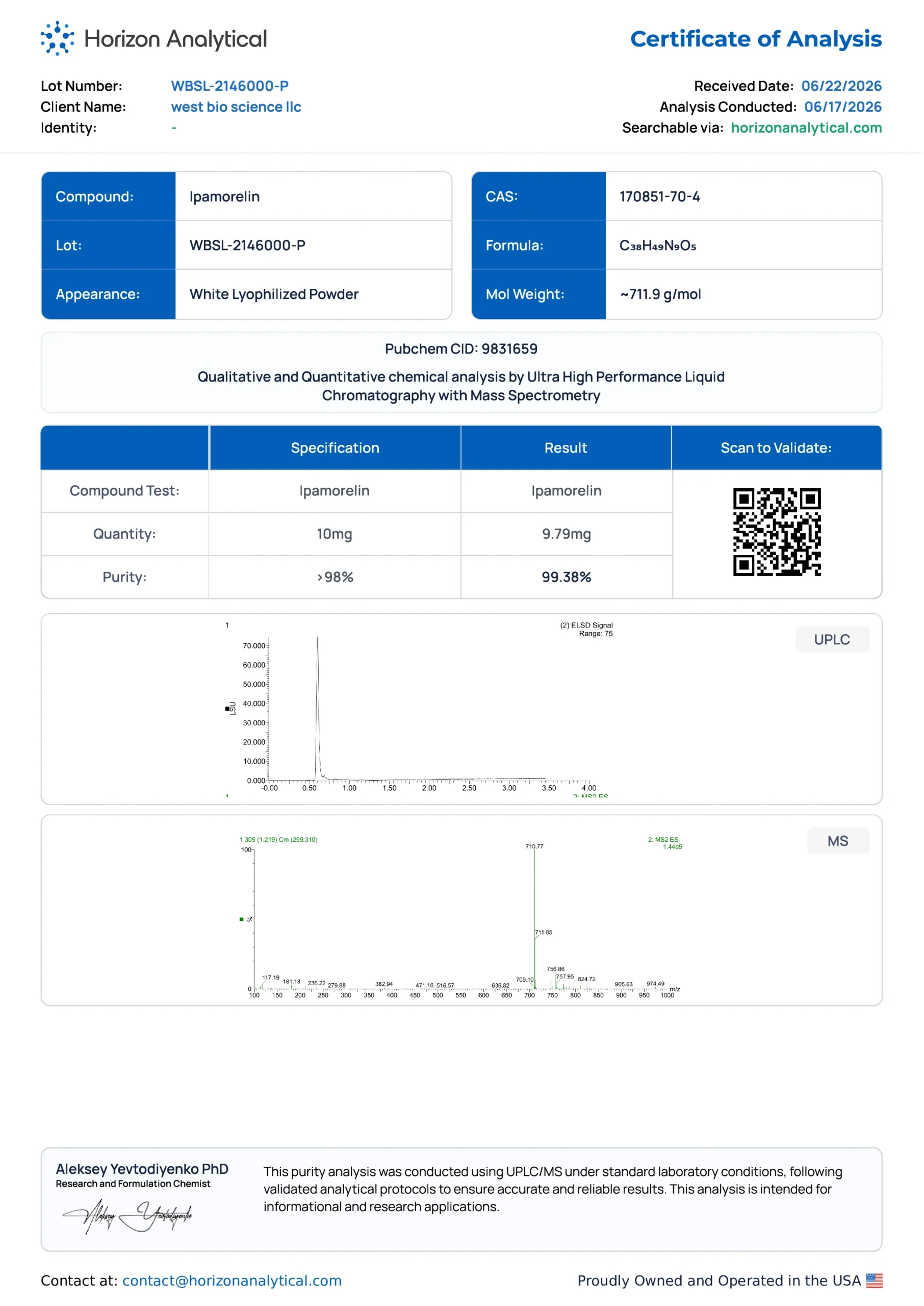
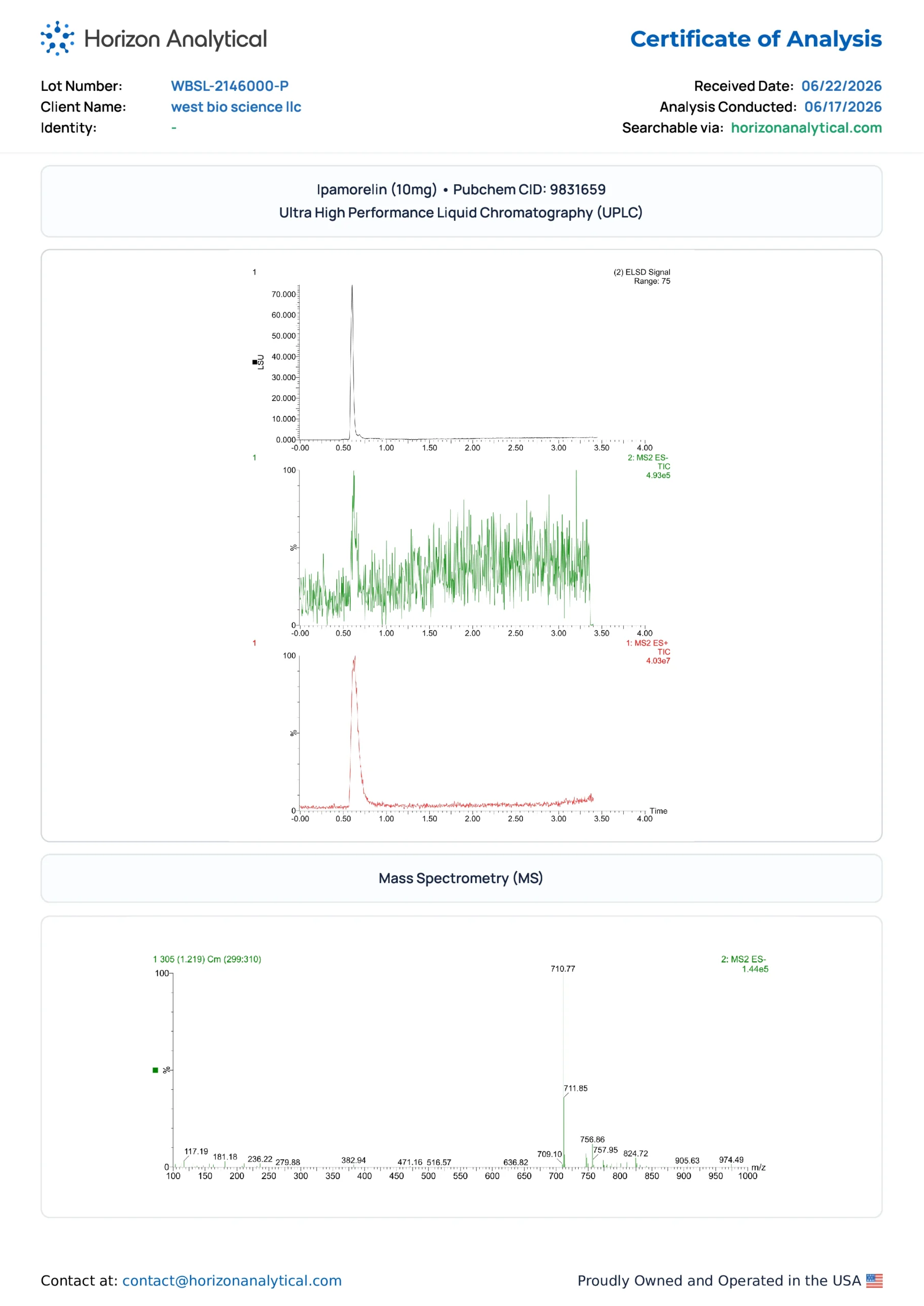
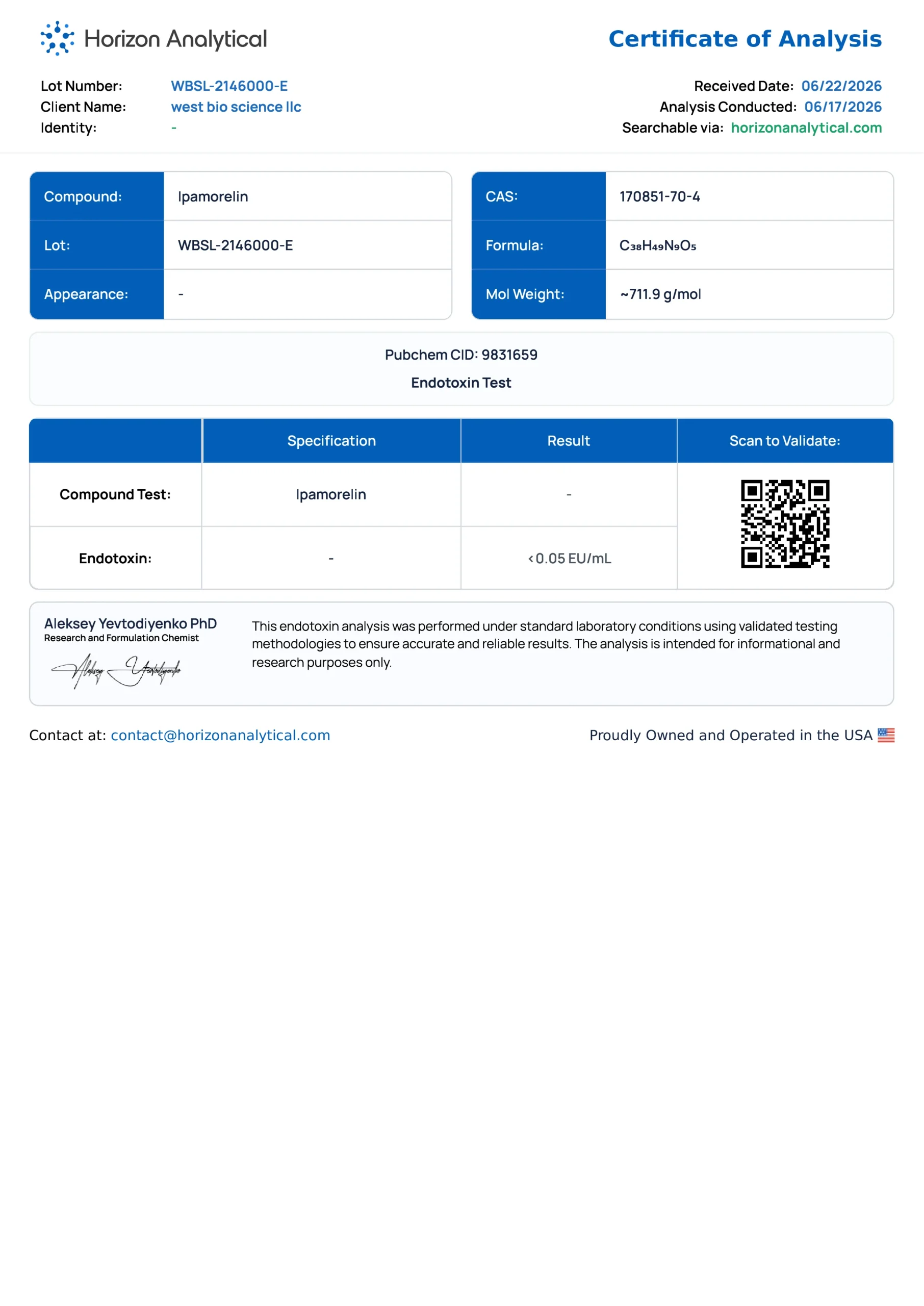
Batch validated to support consistent experimental use.
Lyophilized for Stability
Freeze-dried form supports reliable storage and reconstitution.
Packaged for Laboratory Environments
Vials packaged to support controlled handling and experimental procedures.
What is Ipamorelin?
Ipamorelin is a synthetic pentapeptide referenced in scientific literature that interacts with specific receptors in investigational models of peptide signaling.
Why do researchers use this peptide?
Researchers use Ipamorelin to explore signaling pathways and peptide-receptor dynamics in laboratory contexts where controlled investigation of molecular interaction is required.
West Peptides is committed to producing products that meet high standards of purity and consistency. Our Ipamorelin is synthesized and verified according to rigorous internal quality measures to support reliable research workflows.
This product is supplied for scientific research and laboratory investigation only. These products are not approved for human or veterinary use. They are not intended for use as drugs, dietary supplements, cosmetics, or food products.
Our products are produced using a freeze-drying process (lyophilization), which helps maintain their integrity and stability during transit, typically for up to 3–4 months.
After the peptides are reconstituted (mixed with bacteriostatic water), they should be kept refrigerated to preserve their quality. Once in liquid form, they generally remain stable for up to 30 days when stored properly.
Lyophilization—also referred to as cryodesiccation—is a dehydration method where the material is first frozen and then exposed to low pressure. This allows moisture to transition directly from solid to vapor, leaving behind a dry, stable compound in the form of a light, crystalline powder. In this state, the product can be kept at room temperature until it is ready to be reconstituted.
Upon receiving your peptides, it is recommended to protect them from heat and light exposure. For short-term use (ranging from a few days to several weeks), refrigeration below 4°C (39°F) is suitable. Lyophilized products can also tolerate room temperature storage for a limited period if they will be used relatively soon.
For extended storage—spanning several months or longer—freezing is advised. Ideally, peptides should be kept at approximately -80°C (-112°F) to best maintain long-term stability
A precision-driven journey from pharma-grade raw materials to your doorstep, ensuring the highest purity, stability, and quality at every stage.
From molecule to delivery — West Peptides