
$99.99
BUY ONE, GET ONE FREE
Add any quantity to your cart - we'll double it for free. Limited time offer.
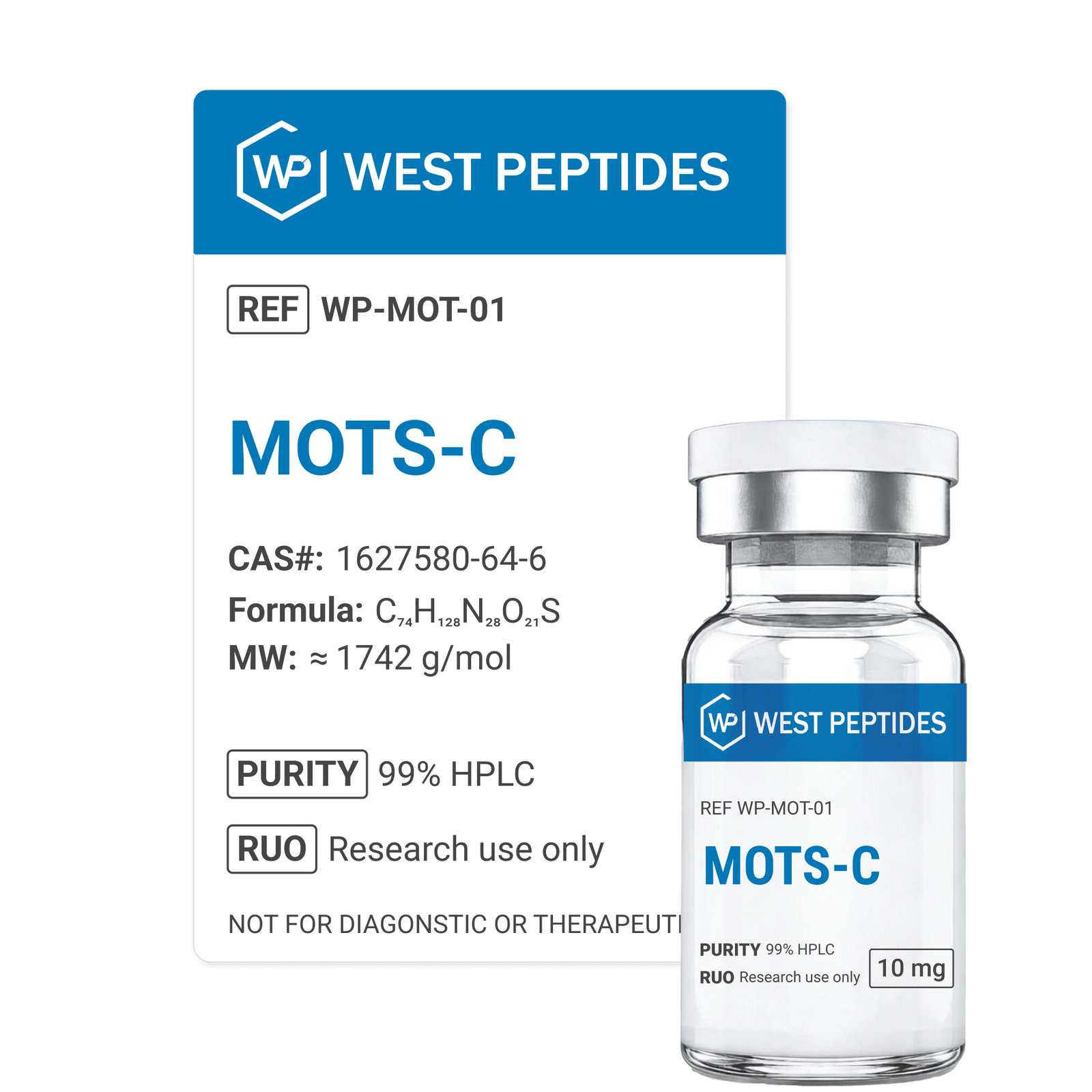
MOTS-C is a laboratory-synthesized peptide sequence derived from mitochondrial-associated research literature. It has gained attention in scientific environments due to its defined molecular structure and its role in experimental studies exploring intracellular signaling and regulatory pathways.
This product is supplied as a multi-vial kit to support structured research protocols requiring consistency across experimental replicates.
$99.99
 Manufactured
MOTS-C is a laboratory-synthesized peptide sequence derived from mitochondrial-associated research literature. It has gained attention in scientific environments due to its defined molecular structure and its role in experimental studies exploring intracellular signaling and regulatory pathways.
This product is supplied as a multi-vial kit to support structured research protocols requiring consistency across experimental replicates.

MOTS-C is a laboratory-synthesized peptide sequence derived from mitochondrial-associated research literature. It has gained attention in scientific environments due to its defined molecular structure and its role in experimental studies exploring intracellular signaling and regulatory pathways.
This product is supplied as a multi-vial kit to support structured research protocols requiring consistency across experimental replicates.
MOTS-C is a short peptide fragment referenced in preclinical and laboratory studies focused on molecular communication systems within controlled models. Because of its distinct amino acid sequence, it is commonly selected for experimental designs examining peptide-driven signaling mechanisms.
West Peptides provides MOTS-C in lyophilized form to preserve structural integrity and allow for controlled preparation using appropriate sterile solvents in laboratory settings.
Each kit contains ten vials, enabling researchers to maintain uniformity across study phases or repeated analytical procedures.
This multi-vial configuration is intended to support repeatability and structured research workflows.
In laboratory investigations, MOTS-C has been referenced in studies examining cellular regulatory pathways and peptide-mediated signaling interactions. Defined peptide fragments such as MOTS-C are often used to explore how specific molecular sequences behave within controlled experimental environments.
Because mitochondrial-derived peptide sequences are a developing area of research, MOTS-C is frequently incorporated into exploratory and comparative study models.
MOTS-C is supplied in freeze-dried format to maintain stability during storage. Reconstitution should be performed using appropriate sterile laboratory solvents and handled by qualified personnel within controlled research environments.
Proper storage conditions help maintain consistency and analytical reliability throughout experimental use.
What is MOTS-C?
MOTS-C is a synthetic peptide sequence derived from mitochondrial-associated research literature and used in laboratory investigation.
Why is MOTS-C supplied in multiple vials?
Multi-vial packaging supports structured experimental design, allowing for repeat testing and consistency across research phases.
What type of research references MOTS-C?
MOTS-C has been cited in scientific discussions involving cellular signaling pathways and regulatory peptide systems in controlled experimental models.
This product is intended strictly for laboratory research and scientific investigation purposes only. MOTS-C is not approved by the FDA for human or veterinary use. It is not intended for use as a drug, dietary supplement, cosmetic, or food product.
Our products are produced using a freeze-drying process (lyophilization), which helps maintain their integrity and stability during transit, typically for up to 3–4 months.
After the peptides are reconstituted (mixed with bacteriostatic water), they should be kept refrigerated to preserve their quality. Once in liquid form, they generally remain stable for up to 30 days when stored properly.
Lyophilization—also referred to as cryodesiccation—is a dehydration method where the material is first frozen and then exposed to low pressure. This allows moisture to transition directly from solid to vapor, leaving behind a dry, stable compound in the form of a light, crystalline powder. In this state, the product can be kept at room temperature until it is ready to be reconstituted.
Upon receiving your peptides, it is recommended to protect them from heat and light exposure. For short-term use (ranging from a few days to several weeks), refrigeration below 4°C (39°F) is suitable. Lyophilized products can also tolerate room temperature storage for a limited period if they will be used relatively soon.
For extended storage—spanning several months or longer—freezing is advised. Ideally, peptides should be kept at approximately -80°C (-112°F) to best maintain long-term stability
A precision-driven journey from pharma-grade raw materials to your doorstep, ensuring the highest purity, stability, and quality at every stage.
From molecule to delivery — West Peptides